
Office space scalability is the ability to adjust workplace capacity as a business grows, restructures or changes how employees use the office. For businesses seeking a service office in Singapore, scalable workspace planning helps align physical office requirements with recruitment and operational needs without committing too early to substantially more space than the company currently requires.
Growth rarely follows a perfectly predictable schedule. A startup may recruit quickly after securing new business, while an established SME may expand gradually across several departments. Project teams can also increase temporarily before reducing in size once work is completed.
These changes make fixed workspace planning difficult.
Scalable office space solutions for startups and growing businesses provide an alternative approach. Instead of treating office capacity as a decision that must remain unchanged for years, companies can plan their workplace in stages.
This can involve moving between coworking, serviced and private office environments as requirements develop. The objective is not constant relocation, but creating a business expansion office strategy that allows the workplace to respond when meaningful changes occur.
Why Office Space Scalability Matters
Office space scalability matters because workforce requirements can change faster than conventional property decisions.
An office that fits a company today may become restrictive after a period of recruitment. Conversely, securing substantial additional capacity based on aggressive growth forecasts can leave the organisation maintaining workspace that remains unused.
Both situations create inefficiency.
Too little space can affect employee comfort, meeting-room availability and normal business operations. Too much space can result in resources being committed to capacity that does not currently support the organisation.
Scalability provides a middle ground.
A scalable workplace strategy focuses on current requirements while identifying practical options for future expansion or adjustment. Businesses considering a service office in Singapore can explore managed workspace arrangements that better match their current team size while allowing them to reassess their needs as operations develop.
The company does not need to predict its exact headcount several years in advance. It needs to understand its likely growth scenarios and determine whether the selected workspace can respond appropriately.
Planning Office Expansion Alongside Business Growth
Office expansion should be planned alongside business growth because employee numbers, organisational structure and workspace demand are closely connected.
Workplace planning should not happen separately from recruitment.
If management expects a department to expand substantially, the office strategy needs to account for that possibility.
However, projected recruitment should be separated from confirmed hiring.
A company may have ambitious expansion targets, but workspace commitments based entirely on optimistic assumptions can create unnecessary capacity.
A more practical approach is to divide growth into stages:
- Current employees and confirmed hires
- Expected near-term recruitment
- Moderate growth projections
- Higher-growth scenarios
Each stage can then be translated into approximate workspace requirements.
This creates a flexible workspace growth planning framework rather than a single fixed prediction.
Understanding Current Workspace Utilisation
Current workspace utilisation shows how employees actually use the office and provides a factual starting point for scalability planning.
Total headcount alone may not accurately represent office demand.
A company with 50 employees does not necessarily need 50 permanent workstations if it operates a hybrid model. Conversely, a team with lower headcount may require additional meeting rooms because employees regularly host clients or conduct collaborative sessions.
Businesses should therefore consider several forms of utilisation.
These include workstation occupancy, peak attendance, meeting-room demand and the frequency of client visits.
Peak utilisation deserves particular attention.
Planning around average attendance can create problems if most employees attend on the same days.
Understanding actual workplace behaviour helps businesses distinguish genuine capacity requirements from assumptions. This is especially relevant when evaluating a service office in Singapore, where the suitability of a workspace depends on how its facilities and available capacity align with the company's day-to-day operations.
Aligning Workspace Capacity With Future Hiring Plans
Workspace capacity should reflect realistic hiring plans so that recruitment does not immediately create physical office constraints.
HR and management teams often know when particular departments are expected to expand.
This information should be incorporated into workspace planning.
For example, if a company expects to add several employees during the next six months, management can determine whether the current office can accommodate them or whether additional capacity will be required.
The business should also consider the type of roles being recruited.
Employees who work primarily remotely may have different workspace requirements from client-facing employees who attend the office regularly.
Future hiring plans should therefore be translated into expected physical attendance rather than simply added to total headcount.
This produces a more accurate capacity forecast.
The Advantages of Flexible Workspace Solutions for Scaling Companies
Flexible workspace solutions can support scaling companies by allowing workplace capacity to develop alongside changing business requirements.
A conventional office can work effectively when the organisation has stable long-term requirements.
The challenge occurs when future headcount is uncertain.
Adaptable commercial office rentals may provide businesses with greater ability to select space according to their present team while maintaining potential pathways for expansion.
The practical benefits can include:
- Reduced dependence on long-range headcount predictions
- Access to established workplace infrastructure
- Ability to consider different office configurations
- Less physical setup when workspace requirements change
- Greater alignment between office capacity and operational stages
These benefits depend on the provider, contractual terms and actual workspace availability.
Flexibility should therefore be verified rather than assumed.
Coworking as an Early-Stage Workspace
Coworking can provide an early-stage workspace for individuals and small teams that value shared facilities and adaptable access.
A newly established company may not immediately require a dedicated conventional office.
Its initial team may be small, and future recruitment may remain uncertain.
Coworking environments can provide workstations, connectivity and shared facilities while the organisation develops.
This arrangement may also suit employees who primarily work independently but require periodic access to a professional workplace.
However, coworking becomes less suitable for some companies as they grow.
Privacy, team identity, confidential conversations and dedicated workspace can become more important.
Scalability planning should therefore consider what comes after coworking rather than viewing it as a permanent solution for every organisation.
Transitioning From Coworking to a Private Office
A coworking to private office transition can become appropriate when a growing team requires greater privacy, consistency and dedicated space.
There is no universal employee number at which this transition should occur.
The decision depends on how the team works.
A relatively small organisation handling confidential client information may require a private office earlier than a larger creative team comfortable in shared surroundings.
Common indicators that a private office may be appropriate include increasing confidential discussions, frequent internal meetings and the need for a consistent team environment.
Moving within a managed workspace environment can reduce some of the complexity associated with this transition.
Employees may remain within a familiar location while moving into a workspace better suited to the company's current stage. A serviced office in Singapore can be worth considering when a business wants a dedicated workspace alongside established facilities, although the availability of suitable suites will depend on the provider.
Serviced Offices as a Scaling Option
Serviced offices can support growing businesses by combining dedicated workspace with established facilities and provider-managed workplace services.
This can be useful when a company has moved beyond shared coworking but is not ready to establish a conventional office independently.
A serviced office may provide furnished private space, connectivity, meeting facilities and managed common areas.
The business can therefore focus more heavily on its own operations rather than coordinating every aspect of workplace setup. For companies seeking a service office in Singapore, this arrangement can offer a professional base while reducing the need to manage office infrastructure independently.
Scalability depends on available capacity.
A company expecting significant growth should determine whether larger offices or additional suites may become available.
The existence of a serviced-office model does not guarantee that expansion space will always be available at the required time.
Private Offices for Established Growing Teams
Private offices can provide growing teams with dedicated environments while retaining access to shared facilities within a managed workspace.
Privacy becomes increasingly important as businesses develop more structured departments and processes.
Employees may handle sensitive information, conduct internal meetings or require quieter working conditions.
A furnished private office can provide this separation without requiring the organisation to create an entire standalone workplace.
Growing businesses should still consider future capacity.
Selecting a private office that exactly matches current headcount may create limitations after the next recruitment phase.
Some reasonable capacity planning or a clear expansion pathway can reduce this risk.
Comparing Workspace Models Across Growth Stages
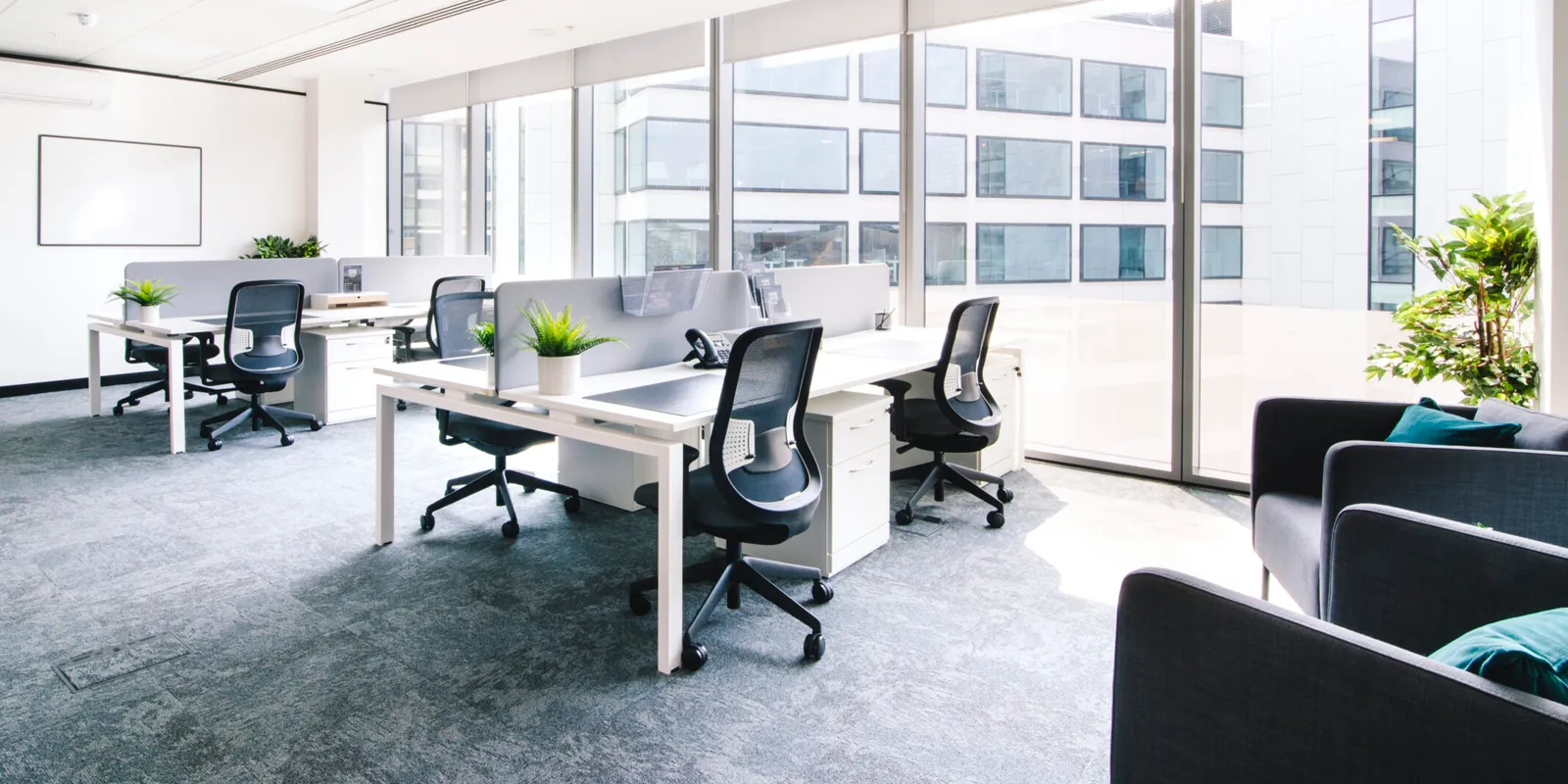
Different workspace models can suit different stages of organisational development.
| Growth Stage | Possible Workspace | Primary Consideration |
|---|---|---|
| Individual or very small team | Coworking or shared workspace | Flexible access |
| Developing startup | Coworking or small private office | Privacy and adaptability |
| Growing team | Serviced or private office | Dedicated capacity |
| Expanding SME | Larger managed office | Scalability and facilities |
| Stable established operation | Managed or traditional office | Long-term requirements |
This framework is not prescriptive.
Some small companies require private offices from the beginning, while larger organisations may continue using flexible workspace for particular departments or projects.
The appropriate model depends on actual operational requirements rather than company size alone. When comparing a service office in Singapore with other workspace arrangements, businesses should also consider the level of management support, available facilities and contractual flexibility offered by each provider.
Planning for Growth Without Overcommitting
Businesses can plan for growth without overcommitting by combining realistic forecasts with identified expansion options.
The objective is not to eliminate spare capacity entirely.
Some additional rooms can help accommodate new employees and short-term changes.
The problem occurs when a company maintains substantial unused space for growth that may not occur for several years.
A scalable strategy asks a different question.
Instead of asking, "How much space might we eventually need?", management can ask, "What space do we reasonably need now, and what options exist if our requirements increase?"
This distinction reduces dependence on uncertain long-term forecasts.
It also encourages businesses to review workspace decisions as new information becomes available.
Avoiding Office Expansion Disruption
Office expansion should be planned to minimise disruption to employees, technology and normal business operations.
Moving into a larger workspace can affect several functions simultaneously.
Employees may need new access arrangements. IT equipment may need to be relocated or reconfigured. Clients and suppliers may need updated location information.
Expansion within the same managed office environment can simplify some of these changes.
The organisation may be able to retain familiar common facilities and building access while moving to a different suite.
However, even internal moves require planning.
Businesses should identify responsibilities, communicate timelines and test critical technology before the new workspace becomes the primary operating location.
When Relocation Becomes Necessary
Relocation becomes necessary when the current workplace or location can no longer support the organisation's operational requirements and suitable expansion options are unavailable.
Scalability does not mean every company can remain indefinitely in the same building.
A business may outgrow available capacity.
Its client base may shift to another area, or the workforce may develop commuting requirements better served by a different location.
The company's operational model may also change.
A workplace designed for a small startup may no longer be suitable for a larger organisation with multiple departments.
Relocation should therefore be treated as one possible stage within long-term workspace planning rather than automatically viewed as a planning failure. For businesses using a serviced office in Singapore, reviewing available alternatives before capacity becomes restrictive can help make the transition more manageable.
The goal is to manage the transition before existing premises become a significant constraint.
Scaling Workspace for Project-Based Growth
Project-based growth requires scalable workspace because temporary increases in headcount do not necessarily justify permanent office expansion.
A company may secure a project requiring additional employees for a defined period.
Once the project ends, those employees may move to other teams, work remotely or no longer require the same physical capacity.
Permanently increasing the main office footprint can create excess capacity after the project.
Flexible workspace can provide another option.
A business may establish a temporary project office or additional managed workspace for the relevant period.
This allows project infrastructure to reflect project requirements without assuming that every temporary increase will become permanent.
Supporting New Departments and Business Units
Scalable workspace can support new departments by allowing businesses to establish additional teams without immediately redesigning their entire office.
A growing company may create new sales, customer service or regional functions.
These teams may begin with only a few employees before expanding.
A managed office environment can provide a separate workspace while the department's long-term requirements become clearer.
This can also be useful when companies want to test new organisational structures.
The new team has a professional workplace, while management retains greater flexibility over future physical capacity.
Workspace should therefore be treated as infrastructure that supports organisational development rather than something that determines how the organisation must grow. A service office in Singapore may be one option for businesses establishing new teams, particularly when furnished offices and shared facilities suit their operational needs.
Hybrid Work and Office Space Scalability
Hybrid work can improve office space scalability by reducing the direct relationship between employee headcount and permanent workstation numbers.
However, hybrid arrangements require careful planning.
A company may have 80 employees but significantly fewer people attending on a normal day.
This does not automatically mean the office can be reduced to a small number of desks.
Peak attendance, team meetings and company-wide activities must also be considered.
Scalable hybrid workspace planning should therefore analyse:
- Typical daily attendance
- Peak attendance days
- Team collaboration patterns
- Meeting-room requirements
- Future recruitment expectations
This information helps businesses determine how much capacity they genuinely require.
It can also identify whether flexible desks or shared facilities could accommodate growth without immediate physical expansion.
Using Scenario Planning for Office Capacity
Scenario planning helps businesses prepare for several plausible growth outcomes rather than relying on one headcount forecast.
A company can create three basic scenarios.
The first assumes a relatively stable headcount.
The second reflects expected recruitment.
The third considers stronger-than-expected growth.
Management can then evaluate how the current office performs under each scenario.
For example, the existing workspace may comfortably support the stable scenario and require only minor adjustment under expected growth.
The higher-growth scenario may require additional space.
Knowing this in advance allows the company to investigate expansion options before they become urgent. When considering a serviced office in Singapore, businesses can use these scenarios to discuss potential suite requirements and identify practical alternatives with the provider.
Scenario planning does not predict the future.
It helps organisations understand how different futures would affect their workplace.
Developing an Office Scalability Plan
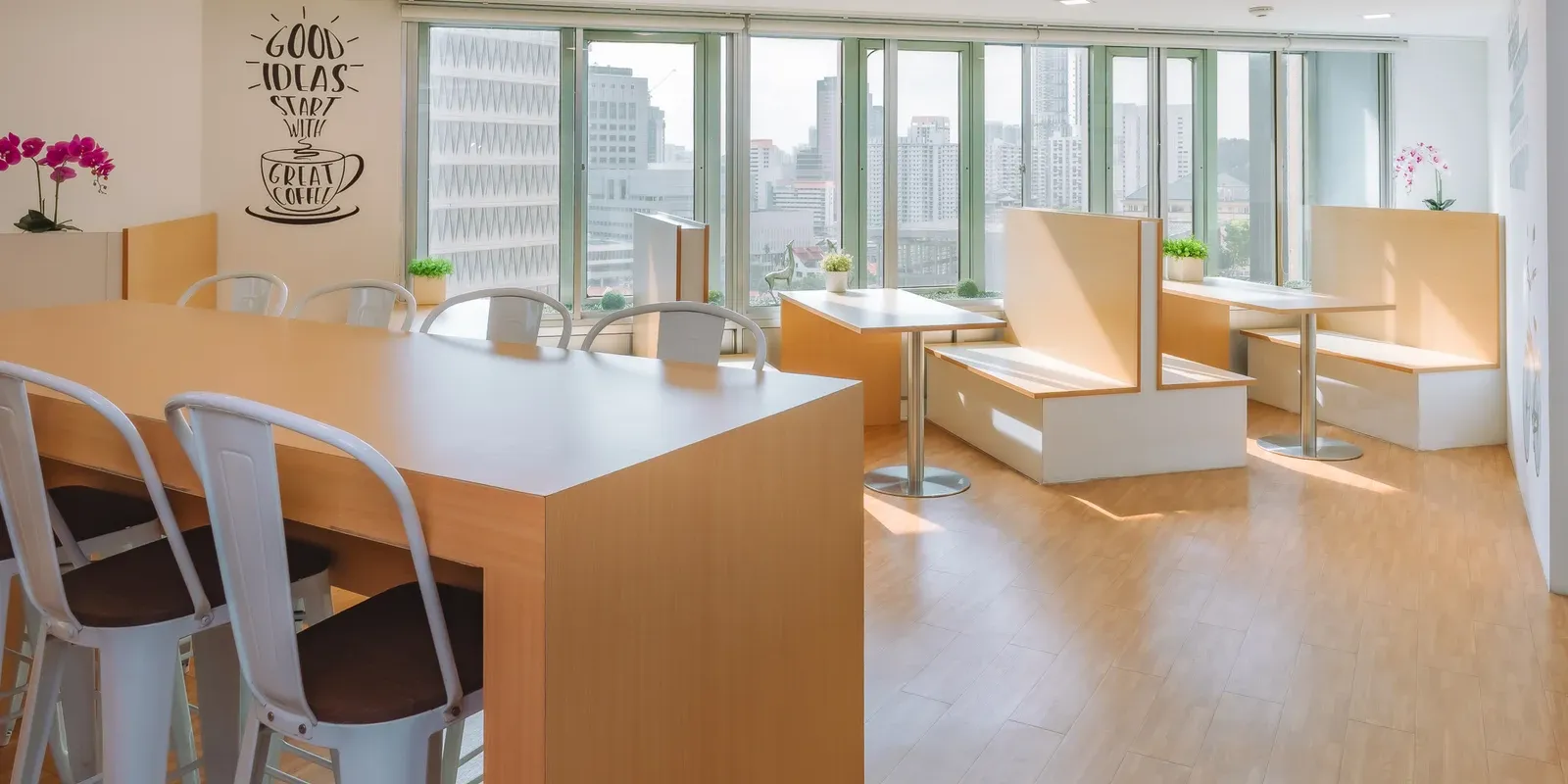
An office scalability plan defines how workplace capacity could change as the organisation reaches different growth stages.
The plan should remain simple enough to update as circumstances develop.
A practical process can include five steps:
- Measure current office utilisation.
- Review confirmed and expected recruitment.
- Estimate peak future attendance.
- Identify workspace expansion options.
- Establish decision points for reviewing capacity.
Decision points are particularly useful.
For example, a business may agree to reassess its office when workstation utilisation reaches a particular level or when confirmed recruitment exceeds available capacity.
This turns scalability into an ongoing management process rather than a one-time property decision.
Common Office Scalability Mistakes
A common office scalability mistake is securing space for an ambitious long-term headcount before there is sufficient evidence that the growth will occur.
This can create prolonged unused capacity.
Another mistake is selecting an office with no clear expansion path.
A workplace may function well initially but create disruption after relatively modest recruitment.
Businesses can also rely too heavily on average hybrid attendance.
Peak office days often determine whether the workplace feels adequately sized.
Another mistake is assuming that flexible workspace guarantees unlimited expansion.
Physical availability remains finite.
Businesses expecting substantial growth should discuss potential options with the provider early and maintain alternative plans where necessary. Before committing to a service office in Singapore, they should also review the terms of the arrangement, available office configurations and any conditions that could affect future changes.
Frequently Asked Questions (FAQs)
What is office space scalability?
Office space scalability is the ability to adjust workplace capacity as employee numbers and business requirements change. It can involve expanding, downsizing or moving between different workspace configurations.
Why is office scalability important for startups?
Startups often have uncertain growth patterns, making long-term headcount difficult to predict. Scalable workspace allows them to plan around current requirements while maintaining options for future expansion.
When should a business move from coworking to a private office?
The transition may be appropriate when the team requires greater privacy, dedicated workspace or more consistent facilities. The decision depends on working patterns and business requirements rather than a specific employee number.
Can serviced offices support growing companies?
Serviced offices can support growing companies by providing furnished private workspace and managed facilities. Businesses should confirm whether additional or larger spaces may be available if future expansion is expected.
How does hybrid work affect office scalability?
Hybrid work can reduce the number of permanent workstations required relative to total headcount. Businesses still need to plan for peak attendance, meetings and collaborative activities.
How far ahead should businesses plan office capacity?
Businesses should plan far enough ahead to identify likely capacity constraints before they become urgent. Regular reviews based on recruitment, attendance and business growth are generally more useful than relying on one long-term forecast.
Building a Workspace That Can Evolve With the Business
Office space scalability allows businesses to align their physical workplace with growth without depending on exact long-term predictions.
Companies can plan capacity around current employees, confirmed recruitment and realistic growth scenarios while maintaining potential pathways into larger or different workspace configurations. Coworking, serviced offices and private offices can each support different stages of this development.
Scalability is not simply about obtaining more desks.
It involves understanding utilisation, hybrid attendance, privacy requirements, meeting demand and the operational impact of moving between workspaces. Businesses exploring a service office in Singapore should consider these factors alongside office size, facilities and the provider's ability to accommodate changing requirements.
The strongest approach is therefore staged rather than fixed.
By reviewing office capacity alongside recruitment and business development, growing companies can make workspace decisions using current information while remaining prepared for future change.
Prepare Your Workspace for the Next Stage of Growth
Businesses planning for office space scalability can assess current utilisation, future hiring and potential expansion requirements before choosing a workspace that supports the next stage of development.
Centennial Business Suites provides managed workspace options for organisations with evolving office requirements. Whether your business needs a professional base for a growing team, a private office as it moves beyond coworking, or a flexible workspace arrangement that can accommodate changing operational needs, our team can help you explore suitable options.
To discuss available arrangements and determine which workspace may suit your current team and future plans, please reach out to our team via email at [email protected] or call/WhatsApp on (+65) 9230 2206.