
Hybrid work models combine remote and office-based working, allowing employees to divide their working time between different locations according to organisational policies and job requirements. Ready office spaces can support this model by providing businesses with an established professional workplace without requiring them to build and maintain a conventional office around full daily attendance.
The challenge for hybrid organisations is not simply deciding how many days employees should work remotely. Businesses also need to determine how much physical workspace they require, when employees are likely to use it and what facilities teams need when they come together.
Maintaining a permanent workstation for every employee may not always reflect actual usage. At the same time, reducing office capacity too aggressively can create overcrowding, meeting room shortages and difficulties when larger groups attend simultaneously.
Hybrid workspace solutions provide another approach. Ready offices can give businesses access to furnished workstations, meeting facilities and managed infrastructure while allowing workplace capacity to be planned more closely around real attendance patterns.
Hybrid Work as a Modern Business Model
Hybrid work is an operating model in which employees perform their responsibilities from a combination of company workplaces and remote locations.
There is no single hybrid structure that applies to every organisation.
Some companies specify particular office days. Others allow individual teams to determine when physical attendance is required. Certain roles may remain predominantly office-based, while others operate mainly remotely.
The physical workplace therefore has a different function under each model.
Instead of being the location where every employee performs every task, the office may become a central environment for collaboration, meetings, training, client interactions and activities that benefit from face-to-face communication.
This shift affects how organisations plan office space.
Workspace decisions increasingly need to consider actual usage rather than total headcount alone.
The Challenges of Managing Remote and In-Office Teams
Managing remote and office-based employees simultaneously creates challenges in workspace capacity, communication, collaboration and access to facilities.
A hybrid model can become inefficient if the physical office is not designed around the way employees actually use it.
Uneven Office Attendance
Hybrid attendance is rarely distributed evenly across the working week.
Many employees may prefer the same days for office attendance because of team meetings, collaborative activities or company policies.
This can create significant differences between average and peak occupancy.
For example, an office may appear underused across the entire week while still becoming crowded on particular days.
Businesses should therefore plan workspace according to realistic peak attendance rather than average occupancy alone.
Maintaining Team Collaboration
Remote technology supports communication, but some activities still benefit from employees working together physically.
Workshops, planning sessions, training and complex discussions may be easier to conduct when participants are in the same environment.
Hybrid offices therefore need appropriate collaborative facilities.
Simply providing enough desks may not be sufficient.
Teams may also require meeting rooms, discussion areas and spaces suitable for different types of group work.
Providing Equal Access to Workspace
Hybrid employees need predictable access to suitable workspace when they attend the office.
If employees regularly arrive without knowing whether desks or meeting rooms will be available, confidence in the hybrid model can decline.
Flexible desk access offices can help when capacity is managed according to expected attendance.
However, businesses still need clear systems for deciding how shared workstations and meeting facilities are used.
How Ready Office Spaces Bridge Flexibility Gaps
Ready office spaces bridge flexibility gaps by providing established workplace infrastructure that can be used without requiring businesses to create a full conventional office from the ground up.
This can be particularly useful when an organisation is still determining its long-term hybrid working patterns.
A company introducing hybrid work may not immediately know how much physical office capacity it will require.
Employee behaviour can change after policies are implemented. Some teams may use the office more frequently than expected, while others may work effectively with limited physical attendance.
Committing to a fixed office configuration before these patterns are understood can make future adjustments more difficult.
A ready office provides a professional working environment while allowing the organisation to assess how employees actually use the workplace.
Furnished Workspace for Hybrid Teams
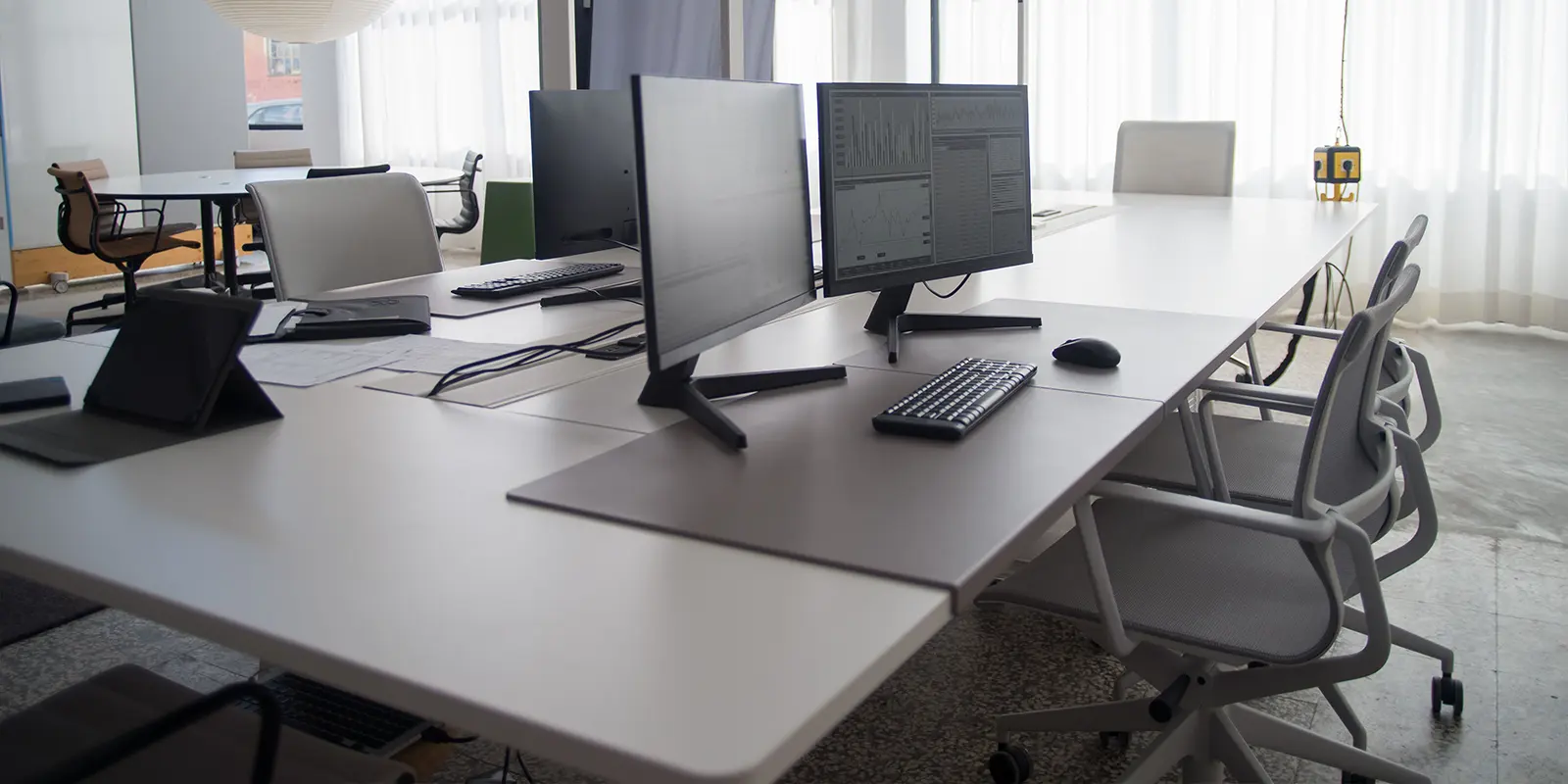
Ready offices typically provide furnished workspace that can be used with less physical preparation than conventional premises.
This can simplify office planning for hybrid organisations.
The company does not necessarily need to design and furnish a complete workplace before testing how employees use the office.
Depending on the provider, employees may have access to workstations, connectivity, common areas and meeting facilities within an established business environment.
The organisation still needs to provide its own computers, software and internal systems.
The ready office primarily reduces the physical infrastructure that the business must establish independently.
The Role of On-Demand Workspace Access
On-demand workspace access allows businesses to align physical office usage more closely with periods when employees actually need to work together.
This can be particularly relevant to distributed or hybrid teams.
A remote team may work independently for much of the week but require a professional environment for regular meetings, training or project sessions.
Maintaining a large permanent office solely for these activities may not reflect actual usage.
A ready workspace can provide an alternative.
Employees can use professional facilities according to the organisation's workplace arrangement rather than relying exclusively on home offices or informal meeting locations.
This creates a physical base without requiring the office to function as the daily workstation for every employee.
Supporting Distributed Workforces
A distributed workforce includes employees who regularly work from different locations rather than one central office.
Ready offices can provide a common physical location where distributed employees come together when necessary.
This can help businesses maintain a consistent professional environment even when employees do not attend every day.
A distributed workforce office setup may support:
- Scheduled team collaboration
- Employee onboarding and training
- Client and stakeholder meetings
- Project planning sessions
- Individual focused work when a home environment is unsuitable
The office therefore serves several purposes rather than functioning only as permanent desk space.
Companies should identify which of these activities matter most before determining the size and configuration of their workplace.
Meeting and Collaboration Facilities
Meeting facilities are particularly important in hybrid workplaces because office attendance often centres on activities that require interaction.
If employees primarily come to the office to collaborate, an environment consisting almost entirely of individual desks may not support the purpose of attendance.
Ready office environments may provide access to meeting rooms and shared discussion spaces.
This allows organisations to combine individual work with structured collaboration.
Businesses should assess meeting capacity carefully.
A hybrid team may have fewer employees in the office overall but greater demand for meeting rooms because office days are deliberately used for collaborative activities.
Workspace planning should therefore consider both desk occupancy and meeting patterns.
Maintaining a Professional Environment for Remote Teams
Ready offices can give remote employees access to a consistent professional environment when working from home is not appropriate.
Home working conditions vary considerably.
Some employees have dedicated home offices, while others may have limited space, household distractions or connectivity constraints.
A professional workspace provides an alternative.
Employees can use the office for focused work, important calls or activities requiring business facilities.
This can also help separate professional and personal environments.
However, companies should avoid assuming that office attendance automatically improves productivity.
The workplace needs to provide a meaningful advantage for the tasks employees are expected to perform there.
Technology Requirements for Hybrid Work
Hybrid work depends on reliable technology because employees need to collaborate across physical and remote environments.
A ready office should therefore be assessed for more than furniture and location.
Reliable internet connectivity is essential.
Meeting environments may also need to support video conferencing so that remote participants can join discussions effectively.
Businesses remain responsible for their own software, devices, cybersecurity and internal technology policies.
The office provider may supply physical connectivity, but the organisation must ensure that its systems are appropriate for distributed working.
A successful hybrid workspace therefore combines physical facilities with suitable digital infrastructure.
Privacy and Information Security
Hybrid workplaces need appropriate privacy and information security because employees may work across shared offices, homes and other locations.
A ready office can provide greater physical control than informal public working environments.
Private offices and meeting rooms may be particularly important when employees handle confidential information.
However, physical privacy is only one part of security.
Companies should maintain appropriate requirements for devices, networks, passwords, data access and document handling regardless of where employees work.
Businesses using shared work environments should also understand building access and visitor arrangements.
Hybrid flexibility should not reduce the organisation's security standards.
Why Businesses Are Reconsidering Fixed Office Commitments
Businesses are reconsidering fixed office commitments because employee attendance and workspace demand can be more variable under hybrid work models.
A traditional office designed around full-time attendance may contain more permanent workstations than the organisation regularly uses.
This does not mean fixed offices are obsolete.
Companies with stable office-based teams, specialised facilities or substantial customisation requirements may still find conventional premises appropriate.
The issue is alignment.
If a company operates a hybrid model but maintains an office designed entirely for daily full attendance, its physical workplace and operating model may no longer match.
Ready and flexible workspace arrangements provide alternatives that can be adjusted more closely to actual requirements.
Ready Offices Versus Fixed Traditional Offices for Hybrid Teams
Ready and traditional offices can both support hybrid work, but they differ in setup requirements and adaptability.
| Consideration | Ready Office | Traditional Fixed Office |
|---|---|---|
| Initial setup | Usually limited | Often more extensive |
| Furniture | Commonly provided | Usually tenant-arranged |
| Managed facilities | Common | Depends on premises |
| Meeting spaces | Often shared or available | Requires own allocation |
| Capacity adjustment | May be easier | Depends on lease and premises |
| Customisation | More limited | Generally greater |
| Hybrid suitability | Can adapt to variable usage | Can support hybrid with planning |
Traditional offices may provide greater control over workplace design.
Ready offices may be more practical for organisations that are still refining their hybrid model or expect workplace requirements to change.
Planning Office Capacity for Hybrid Work
Hybrid office capacity should be based on attendance patterns, working activities and realistic peak usage.
Total employee headcount is only one part of the calculation.
A practical planning process can follow four steps:
Measure Expected Attendance: Determine how many employees are likely to be present on different days.
Identify Peak Periods: Plan around the busiest realistic office days rather than weekly averages.
Understand Office Activities: Determine whether employees primarily need desks, meeting rooms or collaborative areas.
Review Changing Patterns: Reassess workplace usage as teams and hybrid policies develop.
This approach helps businesses avoid both excessive unused space and insufficient office capacity.
Who Can Benefit From Hybrid Ready Offices?
Ready offices can suit organisations that require a professional physical base but do not need every employee in the same workplace every day.
Several business types may find the model relevant.
SMEs
SMEs can use ready offices to establish a structured hybrid workplace without building an entire office infrastructure independently.
This may be particularly useful when internal facilities resources are limited.
Startups
Startups often experience changes in both team size and working arrangements.
A ready office can provide a professional base while the company determines how its workforce will develop.
Regional and International Teams
Companies with employees distributed across markets may use a Singapore workspace as a meeting and operational hub.
The office can support local employees while providing facilities for visiting regional team members.
Project-Based Teams
Temporary project teams may need regular face-to-face collaboration without requiring permanent standalone premises.
A ready office can provide an established environment for the duration of the project, subject to the workspace arrangement available.
Common Mistakes in Hybrid Workspace Planning
A common hybrid workspace mistake is reducing office capacity without first understanding when employees are likely to attend.
Average utilisation can be misleading if attendance is concentrated on particular days.
Another mistake is focusing only on desk numbers.
Hybrid offices often need substantial collaboration and meeting capacity because employees may deliberately attend the workplace for group activities.
Businesses may also underestimate technology requirements.
A meeting room that works well for everyone physically present may perform poorly when several participants are joining remotely.
Finally, organisations should avoid treating the office as the complete hybrid strategy.
Policies, management practices, communication systems and employee expectations are equally important.
The physical workplace supports the model; it does not define it.
Frequently Asked Questions (FAQs)
What is a hybrid work model?
A hybrid work model allows employees to divide their working time between a company workplace and remote locations. The exact balance between office and remote work depends on organisational policies, employee roles and business requirements.
How do ready offices support hybrid work?
Ready offices provide established workstations, professional facilities and managed infrastructure that hybrid employees can use when physical attendance is required. This can reduce the need for businesses to build an office around full daily attendance.
Do hybrid teams need permanent office space?
Some hybrid teams benefit from maintaining a consistent physical base for meetings, collaboration and focused work. The amount and type of space required depends on employee attendance patterns and business activities.
How many desks does a hybrid office need?
There is no universal desk-to-employee ratio for hybrid organisations. Businesses should assess realistic peak attendance, employee schedules and the types of activities performed in the office before determining capacity.
Are ready offices suitable for remote teams?
Ready offices can provide remote teams with professional facilities for occasional or regular physical collaboration. They may also give individual employees an alternative working environment when home working is unsuitable.
What should businesses look for in a hybrid workspace?
Businesses should consider accessibility, workspace capacity, meeting facilities, connectivity, privacy and the ability to adjust office requirements. The environment should support both employees working on-site and colleagues participating remotely.
Creating a More Practical Hybrid Workplace
Hybrid work models require businesses to think differently about the purpose and capacity of their physical offices.
The workplace no longer needs to function solely as a permanent desk location for every employee. It can instead serve as a central environment for collaboration, meetings, training, focused work and activities that benefit from physical interaction.
Ready office spaces can support this approach by providing established workplace infrastructure without requiring organisations to create every physical facility independently.
The most effective arrangement depends on actual employee behaviour.
Businesses should assess peak attendance, meeting demand, technology, privacy and collaboration patterns rather than planning office capacity according to total headcount alone.
When a physical workspace is aligned with these requirements, ready offices can provide a practical foundation for a more adaptable hybrid working model.
Build a Physical Base for Your Hybrid Team
Businesses using hybrid work models can assess whether a ready office provides the appropriate combination of desk access, meeting facilities, privacy and professional infrastructure for their employees.
Centennial Business Suites provides managed workspace options that can support businesses with changing office attendance and team requirements. To discuss an office arrangement suitable for your organisation's working model, please reach out to our team via email at [email protected] or call/WhatsApp on (+65) 9230 2206.