
An office corporate image is the impression a workplace creates about a company's professionalism, organisation and approach to business. For organisations that regularly host clients, candidates, partners or other stakeholders, the physical office can become one part of the overall experience people have with the business.
A professional workplace does not need to be elaborate to create an appropriate impression. Accessibility, cleanliness, privacy, organised reception areas and suitable meeting facilities are often more important than decorative features alone.
Ready office spaces can help businesses establish this environment without designing and managing an entire workplace independently. Depending on the provider, companies may have access to furnished private offices, reception facilities, meeting rooms and professionally maintained common areas.
This can be particularly relevant to startups, SMEs, regional teams and companies establishing a new Singapore presence. These organisations may need a professional client-facing environment even when they do not require a large conventional office.
The workplace should therefore be evaluated as both an operational environment for employees and a physical point of interaction with external stakeholders.
Why Office Appearance Influences Brand Perception
Office appearance can influence brand perception because clients often use visible environmental cues to form impressions about how a company operates.
The office is not the sole determinant of trust.
Service quality, expertise, communication, reliability and business results are far more important to a professional relationship. A well-designed office cannot compensate for poor service or weak business practices.
However, the physical environment can reinforce or contradict the image an organisation communicates elsewhere.
A business that presents itself as organised and professional but conducts important meetings in an unsuitable environment may create an inconsistent experience.
A professional office environment image is therefore best understood as a supporting element of corporate identity rather than a substitute for business capability.
The workplace can help communicate order, preparedness and attention to practical details.
Corporate Image Is More Than Interior Design
Corporate image within an office includes the overall experience of entering, using and interacting with the workplace rather than interior design alone.
Visual appearance matters, but functionality is equally important.
A client may notice whether the office is easy to locate, whether the reception process is organised and whether the meeting environment provides sufficient privacy.
These details influence the practical experience of visiting a business.
A visually impressive office that is difficult to access or unsuitable for confidential meetings may create less value than a simpler environment that functions efficiently.
Businesses should therefore assess corporate image across several dimensions:
- Accessibility and ease of arrival
- Reception and visitor management
- Cleanliness and workplace organisation
- Privacy during meetings
- Quality and suitability of meeting facilities
- Consistency with the company's professional positioning
These factors combine to create the overall workplace impression.
The Importance of a Professional Reception Area
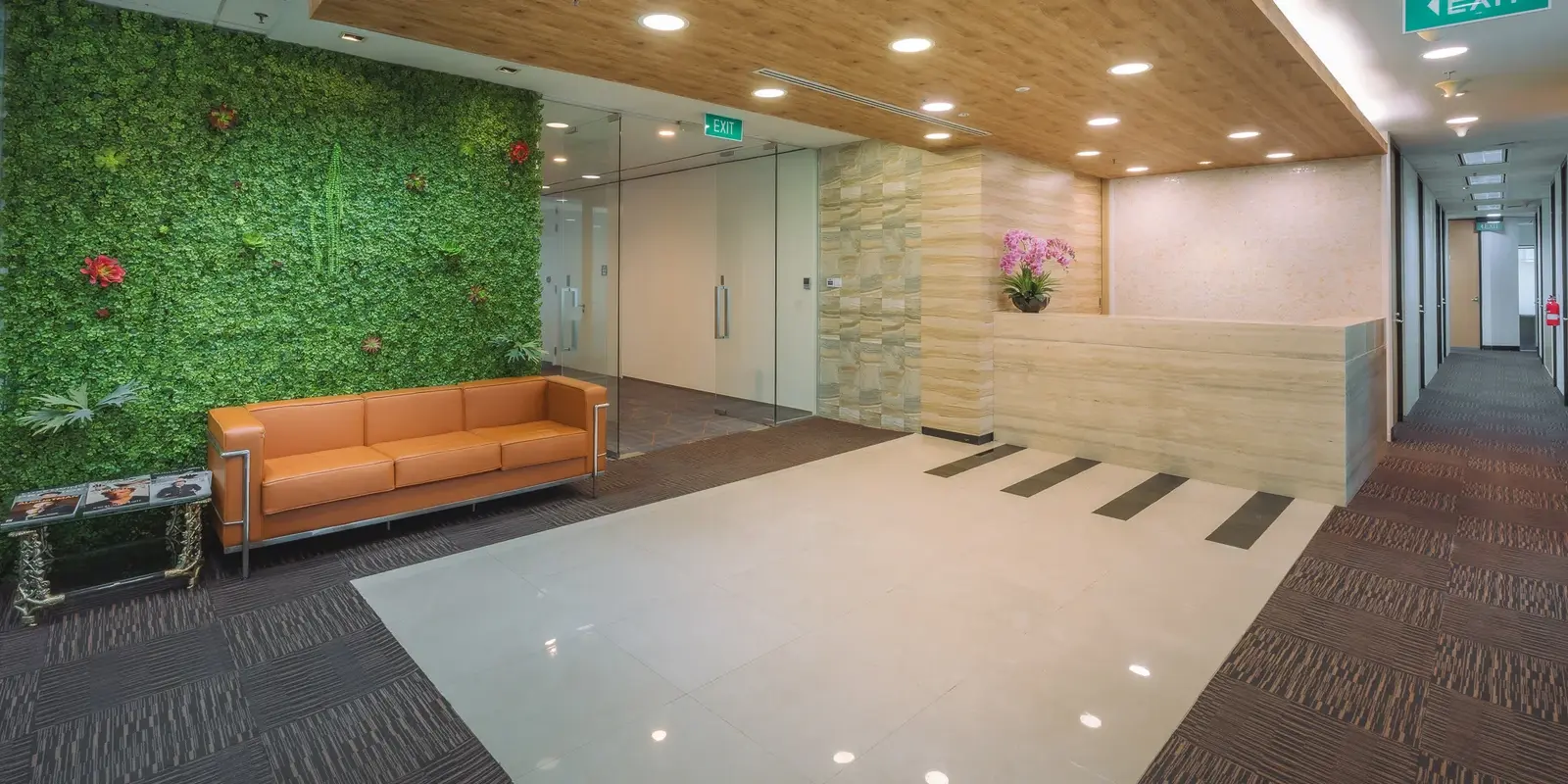
A professional reception area provides clients and visitors with a clear point of arrival and helps create an organised transition into the workplace.
First impressions begin before a meeting starts.
Visitors need to know where to go, whom to approach and how to reach the appropriate employee or meeting room.
A confusing arrival process can create unnecessary friction.
Managed ready office environments may provide reception facilities that help direct visitors and support normal workplace access.
For smaller businesses, this can be useful because the company does not necessarily need to establish and manage a standalone reception area independently.
The value of reception facilities is primarily functional.
They help create a consistent and professional visitor experience while allowing employees to focus on the meeting or business activity itself.
Meeting Rooms as Client-Facing Environments
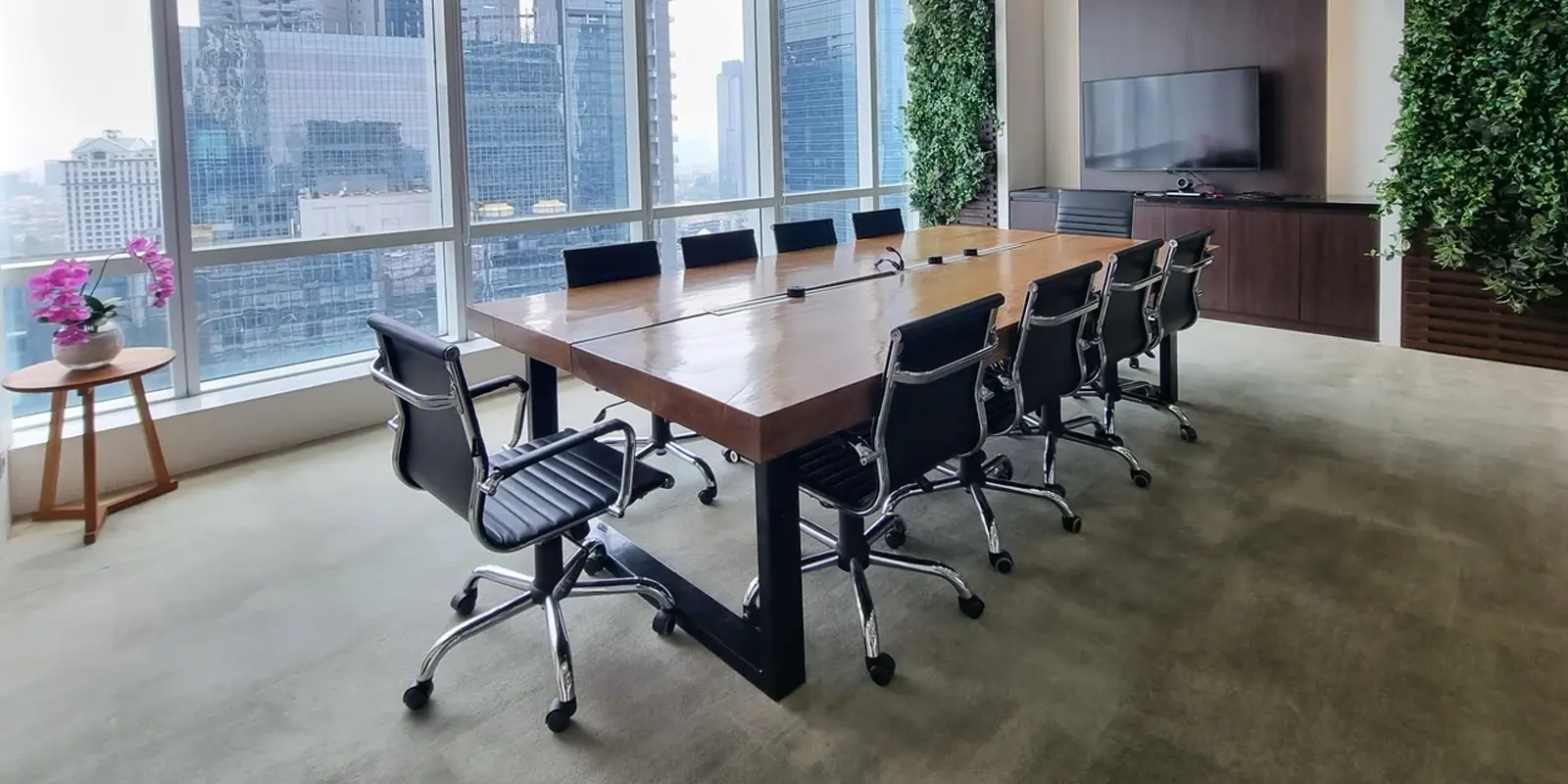
Meeting rooms are important client-facing spaces because they provide the setting in which many significant business discussions take place.
A suitable meeting room should support communication, privacy and the practical requirements of the discussion.
Companies may use these spaces for presentations, consultations, negotiations, interviews and project meetings.
Corporate meeting space rental within a managed office can give smaller organisations access to professional meeting environments without requiring a permanent conference room inside their private office.
This can be an efficient use of the workspace.
A company may need a larger meeting room several times each month but have little reason to maintain one every day.
Shared meeting facilities can address this requirement, provided availability and booking arrangements suit the organisation's needs.
Privacy During Client Discussions
Privacy supports professional client interactions by allowing sensitive conversations to take place without unnecessary exposure to unrelated people.
Many business discussions involve information that should not be handled in open public environments.
Examples include commercial proposals, employee matters, contracts, financial information and strategic plans.
A private meeting environment can therefore contribute to both professionalism and confidentiality.
Ready offices may provide enclosed meeting rooms and private office suites that support these discussions.
Businesses remain responsible for their own information handling and confidentiality procedures.
The physical workplace is only one part of protecting sensitive information.
However, selecting an appropriate environment helps reduce avoidable privacy risks during face-to-face interactions.
The Impact of Modern Interiors on Client Trust
Modern interiors can contribute to a positive client experience when they create a clean, functional and appropriately maintained business environment.
Interior design alone does not create trust.
Trust develops through consistent performance, expertise, transparency and reliable communication.
The workplace can support these qualities by presenting an environment that appears organised and suitable for business activity.
A premium business workspace design does not necessarily require expensive or elaborate decoration.
For many organisations, effective design means providing appropriate furniture, clear layouts, good lighting and professional meeting areas.
Clients are more likely to benefit from a comfortable, functional meeting environment than from design features that do not support the purpose of the visit.
Businesses should therefore evaluate interiors according to usability as well as appearance.
Consistency Between Workplace and Brand Positioning
A workplace supports corporate identity when its environment is consistent with the way the company presents itself to clients and employees.
Different businesses require different physical environments.
A professional services company may prioritise private meeting areas and a formal reception environment.
A technology startup may prefer a more collaborative and informal setting.
A regional corporate team may require a neutral, professional workspace suitable for meetings with stakeholders from several markets.
There is no single office style that communicates professionalism for every organisation.
The relevant question is whether the environment fits the company's business activities and client expectations.
Brand-enhancing office interiors should therefore support the organisation's positioning rather than attempting to create an unrelated impression.
Ready Offices and Consistent Professional Presentation
Ready offices can help businesses establish a consistent professional environment because the core workspace and common facilities are already prepared and maintained.
This can be useful when a company needs to begin operating quickly.
Creating a traditional office may involve fit-out planning, furniture selection, reception preparation and meeting room setup.
A ready office reduces much of this initial work.
The business can occupy an environment where essential client-facing areas already exist.
This does not mean every ready office will match every brand.
Companies should still assess the design, privacy, location and facilities before choosing a workspace.
The advantage is that businesses can evaluate an existing professional environment rather than having to create one entirely from the beginning.
Supporting Startups and SMEs
Ready office spaces can give startups and SMEs access to client-facing facilities that may otherwise require a larger standalone workplace.
A small business may consist of only a few employees but still meet established corporate clients.
Its internal workspace requirements may therefore be limited, while its meeting requirements are more demanding.
Client-facing office solutions can address this imbalance.
The business can use a private office appropriate for its team while accessing larger professional meeting facilities when required.
This allows the physical workplace to reflect actual usage.
The company does not need to maintain a large office solely to create a suitable environment for occasional external meetings.
Supporting International Companies Entering Singapore
Ready offices can help international companies establish a consistent professional environment while developing their Singapore operations.
An overseas company may initially establish a small local team.
However, that team may need to meet clients, partners, candidates and visiting regional colleagues from the beginning.
The organisation therefore needs professional facilities even before its long-term Singapore office requirements are clear.
A managed ready office can provide a local workplace without requiring the company to establish every client-facing facility independently.
Location can be particularly important in this situation.
International organisations should consider accessibility for local employees as well as regional visitors and Singapore-based stakeholders.
The workplace should function effectively as both an employee base and a business meeting location.
Professional Workspace for Recruitment and Interviews
A professional office environment can support recruitment by giving candidates an appropriate setting in which to meet the organisation.
Candidates form impressions of employers through many interactions.
Communication, interview quality, role clarity and employee behaviour are more important than office appearance alone.
However, the physical environment forms part of the candidate experience.
A well-organised meeting location can make interviews easier to conduct and provide candidates with a clearer sense of the company's working environment.
Private meeting rooms can also support confidentiality during recruitment discussions.
For growing companies, ready office facilities can provide these spaces without requiring a dedicated interview room inside the company's private suite.
Hosting Business Meetings in Professional Environments
Professional meeting environments support business discussions by providing appropriate space, privacy and workplace infrastructure.
The location of a meeting can influence its practical effectiveness.
Public cafés and informal locations may be suitable for some conversations but can introduce noise, interruptions and confidentiality concerns.
A professional meeting room provides a more controlled environment.
Depending on the facilities available, teams may also have access to presentation or conferencing infrastructure.
Businesses should select meeting environments according to the type of discussion being conducted.
A brief informal conversation has different requirements from a confidential negotiation or detailed client presentation.
Ready office spaces can provide several options within the same professional workplace.
Technology and the Client Meeting Experience
Technology contributes to client experience when meetings involve presentations, video participants or digital collaboration.
Modern business meetings frequently include people who are not physically present.
A client may attend the office while another stakeholder joins remotely from a different location.
Meeting infrastructure should support this combination.
Reliable connectivity and appropriate conferencing arrangements can help prevent technical difficulties from disrupting discussions.
Businesses should assess these facilities when selecting a ready office.
The appearance of a meeting room matters less if the technology repeatedly prevents participants from communicating effectively.
A professional client-facing environment therefore combines physical presentation with functional digital infrastructure.
Ready Offices Versus Informal Meeting Locations
Ready office meeting environments provide greater control and privacy than many informal public locations.
| Consideration | Ready Office Environment | Informal Public Location |
|---|---|---|
| Meeting privacy | Generally higher | Often limited |
| Noise control | More manageable | Unpredictable |
| Professional setting | Designed for business | Varies |
| Meeting technology | May be available | Often limited |
| Visitor experience | More structured | Informal |
| Confidential discussions | More appropriate | May be unsuitable |
Informal meeting locations can still be appropriate for certain interactions.
The important factor is matching the environment to the purpose of the meeting.
Companies conducting confidential or structured business discussions generally benefit from greater environmental control.
How Ready Offices Support Brand Credibility
Ready offices can support brand credibility by providing a stable and professional setting for external interactions.
They do not create credibility independently.
Credibility develops through expertise, reliability and the organisation's record of delivering what it promises.
The workplace can reinforce those qualities by presenting the company in an organised environment.
For growing businesses, this can be particularly useful.
A company may not yet require large permanent premises but may still need to demonstrate that it operates within a structured professional environment.
Ready offices allow the physical workplace to develop at a different pace from the company's broader growth.
The organisation can access suitable facilities without using office size as a measure of business maturity.
Choosing a Ready Office for Client-Facing Operations
A client-facing business should evaluate ready office space according to accessibility, privacy, meeting facilities and overall functionality.
Several criteria can guide the assessment.
Location
The office should be reasonably convenient for the clients and stakeholders who are likely to visit. Transport connectivity should be considered alongside the commercial relevance of the location.
Reception Experience
Businesses should understand how visitors enter the building and reach the company. A clear arrival process can make meetings easier to manage.
Meeting Facilities
Meeting rooms should provide appropriate capacity, privacy and technology for the discussions the organisation normally conducts.
Private Workspace
Companies should determine whether their own office provides enough privacy for everyday business activities.
Workplace Condition
Common and client-facing areas should be appropriately maintained and suitable for professional use. These criteria help businesses assess the practical client experience rather than focusing only on interior appearance.
Common Mistakes When Using Office Space to Support Corporate Image
A common mistake is treating an expensive-looking office as evidence of business credibility.
Clients ultimately evaluate companies according to their actual performance.
Another mistake is prioritising appearance while overlooking accessibility.
A visually impressive workplace may still create a poor visitor experience if clients consistently struggle to reach it.
Businesses can also underestimate privacy.
Open environments may appear modern but can be unsuitable for confidential client discussions.
Finally, companies should avoid selecting facilities that do not reflect how they actually operate.
A small business that hosts clients only occasionally may benefit more from access to shared professional meeting rooms than from maintaining a large permanent client-facing area.
Corporate image should support operational reality rather than work against it.
Frequently Asked Questions (FAQs)
Does office appearance affect client perception?
Office appearance can contribute to client perception by influencing how organised and professional the environment feels. It is only one factor, however, and cannot replace expertise, communication or reliable service.
Why are meeting rooms important for corporate image?
Meeting rooms provide a controlled environment for client discussions, presentations and confidential conversations. Suitable meeting facilities can help businesses conduct these activities more professionally.
Can a ready office help a startup look professional?
A ready office can give a startup access to private workspace, reception facilities and professional meeting environments. These facilities support a structured client experience without requiring the startup to establish a large standalone office.
Is a CBD office necessary for a professional corporate image?
No. A CBD location can be useful for some client-facing businesses, but accessibility and operational suitability are more important than the district alone. The right location depends on employees, clients and business activities.
Are ready offices suitable for confidential client meetings?
Ready offices can be suitable when they provide enclosed private offices or meeting rooms. Businesses should assess privacy arrangements and maintain their own confidentiality and information-security procedures.
What should a client-facing business look for in ready office space?
A client-facing business should consider accessibility, reception arrangements, meeting-room availability, privacy, technology and the condition of shared areas. These factors directly influence how visitors experience the workplace.
Building Corporate Identity Through a Functional Workplace
An office corporate image is strongest when the workplace supports the organisation's actual business activities while providing clients with an organised, accessible and professional environment.
Reception areas can create a structured arrival experience, while private meeting rooms support confidential discussions and presentations. Modern interiors can contribute to the overall setting, but functionality, privacy and accessibility remain more important than appearance alone.
Ready office spaces can help growing businesses access these facilities without establishing every client-facing element independently.
The workplace should still be selected carefully.
Companies should evaluate whether the location, facilities, technology and physical environment align with how they work and how clients interact with them.
When these elements are consistent, the office can reinforce a company's professional identity without becoming the primary measure of its credibility.
Create the Right Setting for Your Business Conversations
Businesses evaluating their office corporate image can consider how their workspace supports visitor access, private discussions, meetings and everyday professional interactions.
Centennial Business Suites provides managed workspace environments with facilities for businesses requiring professional client-facing settings. To discuss available office arrangements and determine whether they match your organisation's requirements, please reach out to our team via email at [email protected] or call/WhatsApp on (+65) 9230 2206.