
Singapore's business landscape continues to evolve quickly, shaped by changing workforce expectations, cost pressures, and the need for greater operational agility. As more organisations rethink how and where work gets done, demand has grown for smarter office setups that can support both stability and flexibility.
For many companies, especially those navigating expansion, hybrid working, or shifting team structures, the traditional long lease is no longer the only workable option.
Today, flexible workspace solutions in Singapore have become an important part of long-term business planning, helping organisations stay responsive without sacrificing professionalism or productivity.
This shift is also about creating work environments that can adapt to business cycles, support collaboration, and give teams access to the facilities they need without unnecessary overheads.
Whether a company is a fast-growing startup, an established enterprise, or a regional business entering the Singapore market, the right workspace can have a direct impact on efficiency, employee satisfaction, and future growth.
In the middle of this change, many organisations are also looking for practical corporate workspace solutions in Singapore that can align with their working style, brand image, and budget.
The right choice depends on many factors, including team size, location, operational priorities, and how much flexibility the business requires over time.
Types of Flexible Workspace Solutions
Flexible workspaces are available in several formats, and each one serves a different business need. Understanding the main types can help organisations make a more informed decision.
Coworking Spaces
Coworking spaces are shared environments where individuals or teams from different organisations work alongside one another. They are often popular among freelancers, startups, and small teams that want a professional setting without the cost or commitment of a traditional office.
These spaces usually provide communal desks, shared meeting rooms, internet access, printing facilities, and other business essentials. Some also include networking opportunities, community events, and shared breakout areas.
For businesses that value collaboration and convenience, coworking can be an effective entry point into a modern enterprise workspace in Singapore that supports a more dynamic way of working.
Coworking is especially useful for businesses that do not need a full private office every day, or that want a flexible base while testing a new market or building a team.
Serviced Offices
Serviced offices provide fully equipped office spaces that are ready for immediate use. They typically come with furniture, utilities, reception support, cleaning, and administrative services, making them a practical choice for businesses that want minimal setup time.
This option is suitable for companies that need a more private and dedicated setting than coworking, while still retaining flexibility in lease terms and expansion options.
Many organisations prefer serviced offices because they reduce the administrative burden of setting up and maintaining a workspace. For businesses seeking flexible office leasing solutions in Singapore, serviced offices offer a strong balance between convenience, professionalism, and adaptability.
They are often chosen by regional offices, project teams, and businesses that need a polished image without taking on the full responsibility of a conventional office lease.
Private Offices
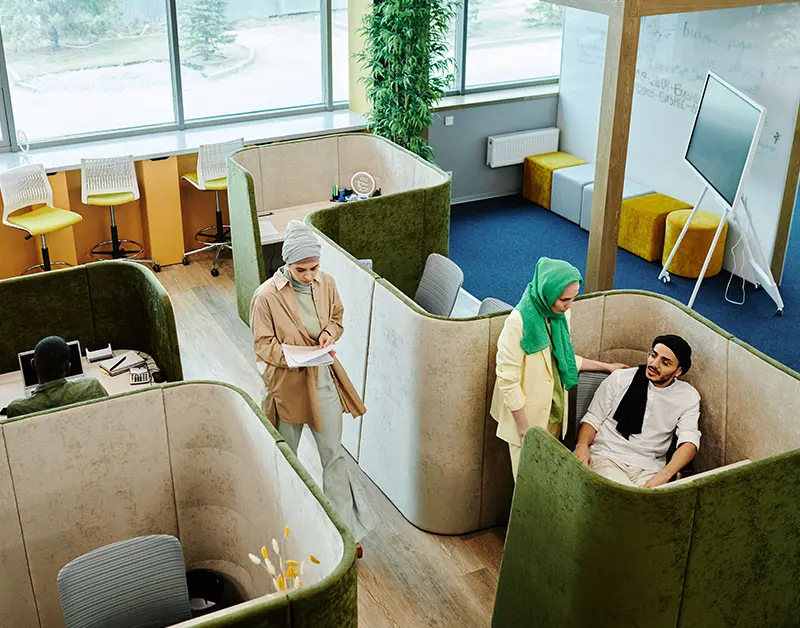
Private offices are enclosed spaces reserved for a single company or team. They offer greater privacy, security, and control over the workplace environment.
While they may still be part of a flexible office provider's portfolio, private offices often appeal to businesses that need confidentiality, uninterrupted focus, or a branded environment that reflects their identity.
A private office can be an excellent choice for organisations handling sensitive information, client-facing teams, or companies that require dedicated work zones while still benefiting from shared amenities such as meeting rooms, pantry facilities, and reception services.
In many cases, private offices bridge the gap between a traditional lease and a fully managed workspace, offering the stability of an exclusive space with the convenience of professional support.
Hybrid Workspace Options
Hybrid workspace options combine several office formats to suit different working patterns. For example, a company may use a private office for its core team, meeting rooms for client discussions, and shared collaboration areas for project-based work.
Some businesses may also combine remote work with a physical office base, depending on staff needs and operational demands. This model is increasingly attractive to organisations that want to support flexibility without losing structure.
It can work particularly well for businesses that are growing quickly or managing teams across multiple locations.
In an on-demand business workspace in Singapore, hybrid arrangements make it easier to scale resources up or down as business needs change.
How to Select the Right Solution
Choosing the right workspace is not only about comparing prices. It is about matching the space to the company's goals, workflow, and future plans. A thoughtful selection process can help avoid unnecessary costs and ensure the space contributes to business success.
Budget Considerations
Budget is often the starting point for any office decision. Businesses should assess not just monthly rent, but also the total cost of occupancy, including utilities, maintenance, furniture, IT infrastructure, cleaning, and fit-out expenses.
A flexible setup can reduce upfront capital expenditure and improve cash flow, especially for smaller businesses or companies entering a new phase of growth. However, the lowest-priced option is not always the best value.
The key is to assess what is included in the package and whether the space can support the business effectively without hidden costs. An affordable workspace should still offer reliability, professionalism, and the services needed to keep operations running smoothly.
This is one reason many organisations compare different adaptable office space arrangements in Singapore before deciding on a final solution.
Team Size and Growth Plans
The ideal workspace today may not be the ideal workspace six months from now. That is why team size and expected growth should play a major role in the decision-making process.
A business with a small team may begin with a coworking arrangement or a compact private office, but if headcount is expected to increase, the ability to expand within the same location becomes highly valuable.
Companies should ask whether the space can accommodate new hires, temporary project teams, or changes in how staff work. A scalable office solution helps the business avoid disruption and maintain continuity as it grows.
This is particularly important for startups, professional firms, and fast-moving companies that need to stay agile while maintaining a stable base of operations.
Location and Business Needs
Location remains one of the most important considerations when choosing office space in Singapore. A well-connected address can make commuting easier for employees, improve accessibility for clients, and strengthen the company's professional image.
Different businesses have different location priorities. Some may value proximity to the central business district, while others may prefer areas with strong transport links, nearby amenities, or access to industry networks.
Businesses that frequently host clients may prioritise a prestigious address, while internal teams may focus more on convenience and day-to-day practicality. Location should also be assessed in relation to the company's broader business needs.
For example, a customer-facing firm may need meeting rooms and reception services, while a project-driven team may require collaboration areas and quiet zones.
The best workspace is one that supports both the business model and the people using it.
Benefits of Flexible Workspaces

Flexible workspaces are more than a convenience. When chosen well, they can deliver measurable business advantages that support both efficiency and employee well-being.
Cost Efficiency
One of the most significant benefits is cost control. Flexible workspaces typically reduce the upfront investment required to establish an office, as many of the essentials are already in place.
This can include furniture, internet, utilities, cleaning, and sometimes even reception or administrative support. By avoiding large fit-out costs and long contractual commitments, businesses can preserve capital for more strategic priorities such as hiring, marketing, technology, or expansion.
This financial flexibility is particularly useful during periods of uncertainty or rapid change.
For organisations that need to remain lean while still presenting a professional image, flexible workspaces can offer a practical and financially sustainable route forward.
Scalability
Scalability is another major advantage. As business requirements change, the workspace can often be adjusted more easily than a traditional office lease would allow. Teams can expand, contract, or reconfigure their space with less disruption.
This ability to adapt is especially valuable in Singapore's competitive business environment, where companies may need to respond quickly to new opportunities or market conditions. A flexible workspace gives businesses room to grow without forcing them into rigid long-term commitments.
For many companies, this is the key reason flexible workspaces make sense: they support growth without creating unnecessary constraints.
Improved Employee Experience
A well-designed office environment can have a meaningful effect on morale, focus, and performance. Employees are more likely to do their best work in a space that is comfortable, accessible, and suited to how they work.
Flexible workspaces often include modern furnishings, meeting facilities, collaborative areas, and amenities that make the workday more efficient and enjoyable. They can also support different working styles, whether employees need quiet focus, group interaction, or a more relaxed setting for informal discussions.
When businesses invest in a workspace that supports both productivity and comfort, they are also investing in staff retention and workplace culture.
This matters not only for day-to-day operations, but also for building a strong employer brand.
Frequently Asked Questions (FAQs)
What are flexible workspace solutions in Singapore?
Flexible workspace solutions in Singapore refer to office arrangements that offer greater adaptability than traditional office leases. These can include coworking spaces, serviced offices, private offices, and hybrid workspace models that allow businesses to scale and adjust according to their operational needs.
Which type of flexible workspace is best for startups?
Startups often benefit from coworking spaces or serviced offices because they require lower upfront investment and provide access to professional facilities without long-term lease commitments. The best option depends on team size, budget, and growth plans.
Can flexible workspaces accommodate growing businesses?
Yes. Many flexible workspace providers offer scalable solutions that allow businesses to expand their office footprint as their teams grow. This helps organisations avoid the disruption and costs associated with relocating to a new office.
Are flexible workspaces more cost-effective than traditional office leases?
In many cases, flexible workspaces can be more cost-effective because they often include furniture, utilities, internet, maintenance, and administrative support within a single package. This reduces setup costs and ongoing operational expenses.
How do I choose the right flexible workspace for my business?
When selecting a workspace, consider factors such as budget, team size, growth projections, location, lease flexibility, and the facilities required to support daily operations. Choosing a workspace that aligns with your business goals can improve efficiency and long-term value.
What industries can benefit from flexible workspace solutions?
Flexible workspaces are suitable for a wide range of industries, including technology, consulting, finance, marketing, professional services, and regional headquarters. Businesses of all sizes can benefit from flexible workspace solutions in Singapore by gaining access to professional office environments without the constraints of traditional leasing arrangements.
Partner with Centennial Business Suites for Your Workspace Needs
At Centennial Business Suites, we understand that every business has unique workspace requirements. Whether you are a startup looking for a cost-effective setup, an SME planning expansion, or an established enterprise seeking a more agile working environment, we provide tailored solutions designed to support your growth.
Our range of workspace offerings is built to deliver flexibility, convenience, and professionalism, helping you focus on what matters most: your business success.
If you are ready to explore the right workspace solution for your organisation, reach out to Centennial Business Suites today and discover how we can help you build a more efficient and adaptable working environment in Singapore.